

Scaling your business into a franchise system requires more than ambition-it demands a solid legal and operational foundation. A franchise readiness assessment reveals whether your business model can actually work for franchisees and whether you’re prepared for the regulatory demands ahead.
At Jennie Amante Law Office, we’ve seen countless entrepreneurs skip this critical step and face expensive problems later. This checklist walks you through the essential areas you need to evaluate before franchising becomes a reality.
Building Your Legal and Operational Foundation
Document Every Process That Drives Profitability
Your franchise model lives or dies on documentation and systems that actually work outside your control. The businesses that move forward fastest are those with operating manuals so detailed that a franchisee could run the business without calling headquarters. Start by auditing every process your current location uses-from daily opening procedures to customer service protocols to inventory management. Write down the exact steps, timelines, and decision rules that make your business profitable. If you cannot document it, you cannot franchise it. This documentation becomes your operating manual, the foundation of every franchise agreement.
Protect Your Intellectual Property Before You Franchise
Examine your intellectual property with the same rigor you apply to operations. Your trademark, logos, trade secrets, and proprietary systems are what franchisees actually buy. Have you registered your trademark with the United States Patent and Trademark Office? If not, that is your first action. An unregistered mark offers minimal protection and creates liability for franchisees who operate under a brand you do not legally own. Check whether your brand name conflicts with existing marks in your industry and geographic markets. Many entrepreneurs discover mid-franchise launch that their chosen name infringes on another company’s rights, forcing costly rebranding.
Test Your Unit Economics Across Different Markets
Your financial performance directly determines franchisability. Calculate your unit economics with precision: What is your average unit volume, or AUV? What percentage of revenue goes to cost of goods sold, labor, rent, and other operating expenses?
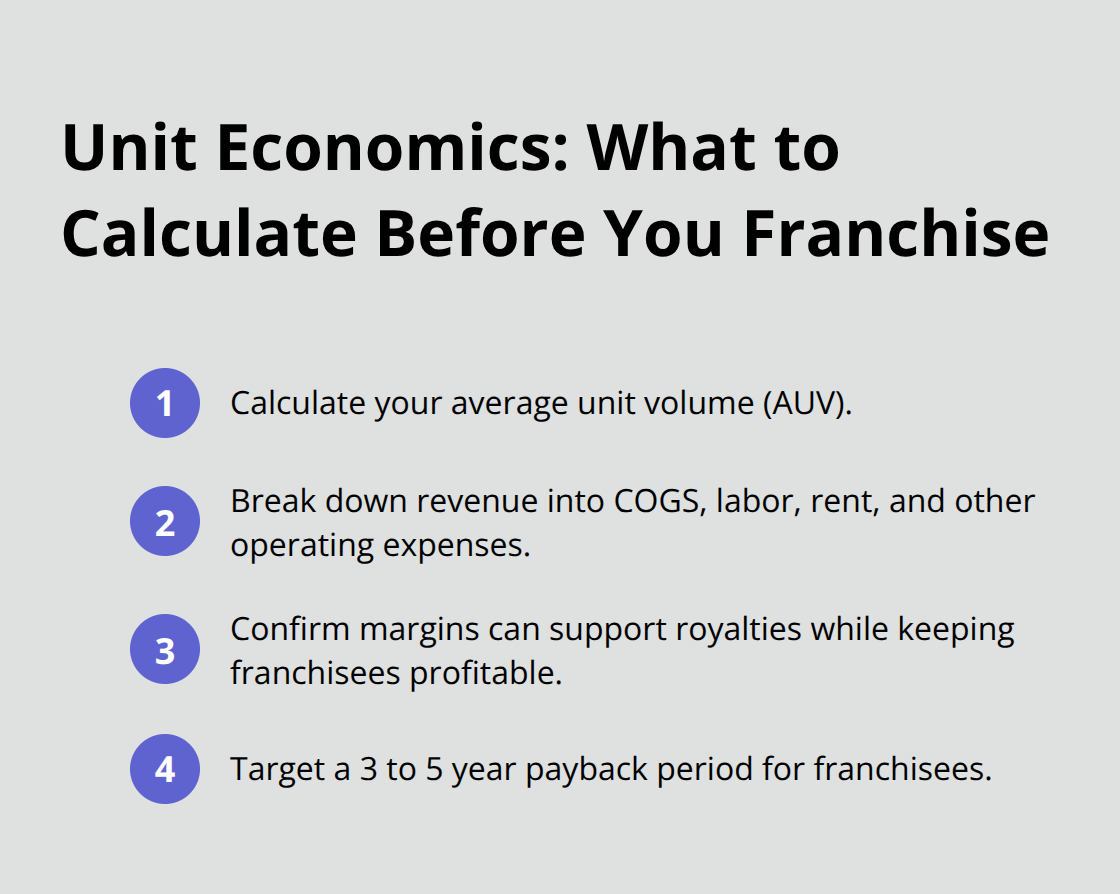
Most franchisees expect to recover their initial investment within three to five years, which means your model must generate sufficient margins to support both franchisor royalties and franchisee profitability. If your current location barely breaks even or requires your personal expertise to stay profitable, franchising will amplify those weaknesses across multiple locations. Franchisees will not succeed where you struggle, and failed franchisees create legal liability and brand damage. Analyze whether your profit margins remain strong across different market conditions and geographic regions (a model that works in one affluent neighborhood may collapse in a different area). This financial stress test separates franchisable models from those that should stay single-unit operations. Once you understand your financial foundation, you need to examine the specific legal requirements that govern franchise systems.
Compliance and Support Systems That Protect Your Franchise
Franchise Disclosure Laws Demand Precision and Planning
Franchise disclosure laws exist in fourteen U.S. states and at the federal level, requiring you to provide prospective franchisees with detailed information about your business, financial performance, litigation history, and franchise agreement terms. The Federal Trade Commission’s Franchise Rule mandates that you deliver a Franchise Disclosure Document at least fourteen calendar days before a franchisee signs anything or pays money. States like California, New York, and Illinois impose additional requirements beyond the FTC standard. If you operate in multiple states, you need separate compliance strategies for each one.
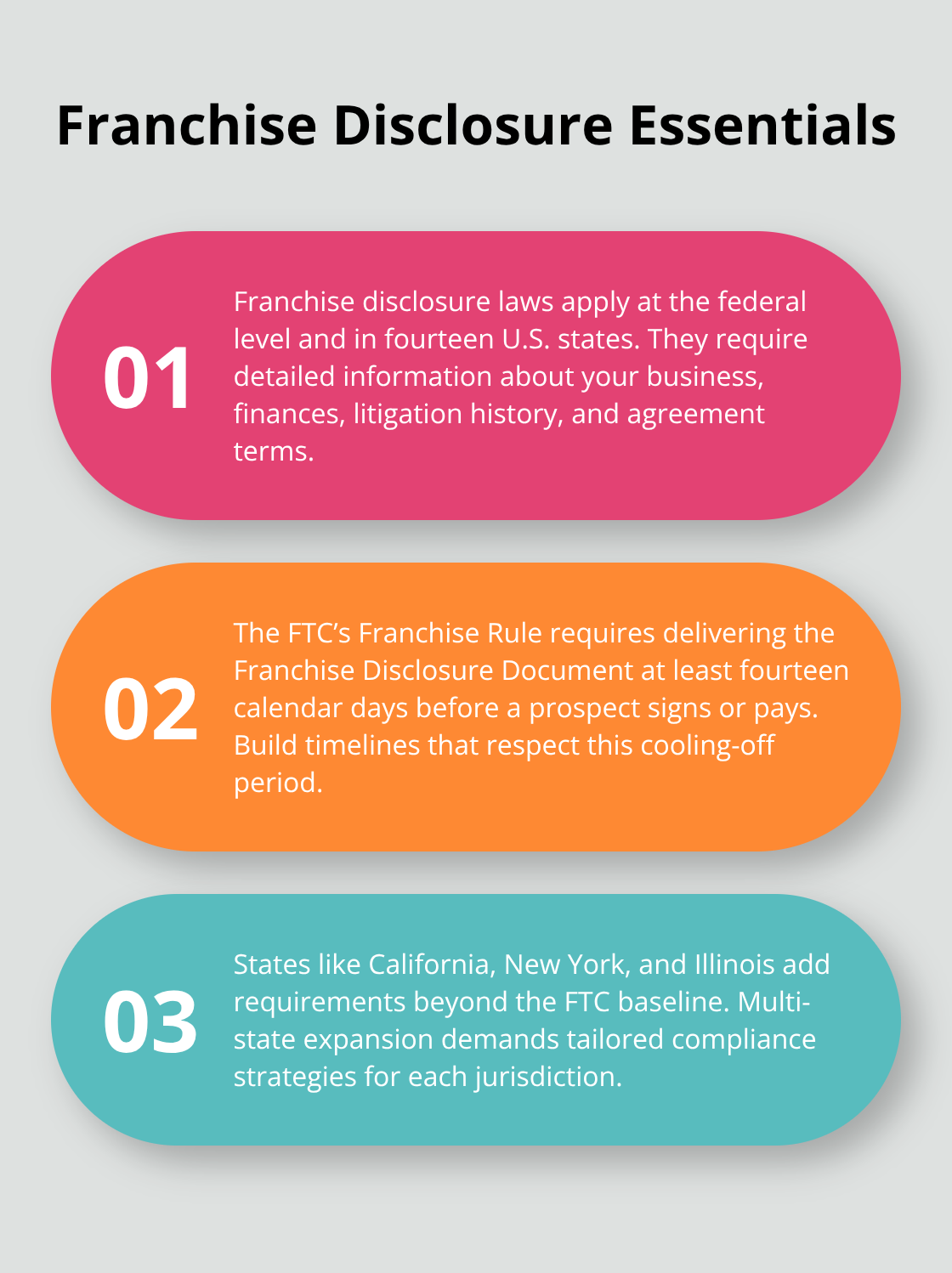
Many franchisors underestimate this complexity and rush their FDD, only to face regulatory delays, franchisee disputes, or enforcement actions that cost far more than proper preparation upfront. Your FDD must include Item 19, which shows audited financial performance representations. The absence of Item 19 actually provides a competitive advantage: franchisees who see no financial claims know you cannot legally make earnings promises, which reduces your liability exposure and prevents franchisees from suing if their location underperforms.
Training Programs Determine Franchisee Success Rates
Franchisees fail not because your business model is weak but because they receive inadequate training and ongoing support. The International Franchise Association reports that franchisees with structured training programs show significantly higher unit-level profitability than those without formal training protocols. Your training program must cover operational procedures, technology systems, customer service standards, financial management, and marketing execution.
Many franchisors treat training as a one-time event; the strongest systems treat it as continuous. Document exactly what training you will provide, when it occurs, how long it lasts, who delivers it, and what success looks like. Your franchise agreement must specify these commitments so franchisees know what to expect and you avoid disputes later.
Legal Structure and Liability Protection Shape Your Risk Exposure
Your legal structure and liability framework determine your exposure if a franchisee faces lawsuits or regulatory problems. The entity you choose to franchise under, how you structure franchisee agreements, indemnification clauses, and insurance requirements all affect whether liability flows back to you. A franchisee’s customer sues over a product injury, a landlord disputes lease terms, or employment claims arise-your franchise agreement and corporate structure determine your exposure.
Experienced legal guidance helps franchisors design agreements that protect franchisor interests while remaining fair to franchisees, reducing the dispute risk that derails franchise systems. This legal foundation becomes your shield against the operational and financial challenges that emerge once franchisees open their doors.
What Ruins Franchise Launches Before They Start
Documentation Failures That Halt Franchise Growth
Most franchisors fail not because their business model is weak but because they skip or rush the documentation phase that makes franchising possible. Entrepreneurs spend months building a franchise program only to discover their operating manual is incomplete, their trademark registration is pending, or their franchise agreement contradicts state disclosure requirements. These oversights cost tens of thousands in legal revisions and delay franchise sales by six to twelve months.
Treating documentation as a checkbox rather than the foundation of your entire franchise system creates immediate problems. Your operating manual cannot be vague or informal; it must specify exact procedures, decision-making authority, quality standards, and performance metrics that a franchisee can follow without constant guidance. If your manual reads like general advice instead of step-by-step instructions, franchisees will operate inconsistently, your brand suffers, and you face liability when their locations underperform.
Many franchisors also underestimate how much their personal judgment drives profitability. You may make decisions intuitively based on years of experience, but those decisions must be documented and teachable. If your success depends on your ability to read customers or negotiate supplier deals in ways that cannot be replicated, your business is not franchisable. Write down exactly how you make decisions, what metrics you track, and what triggers specific actions. This effort separates franchisors who scale successfully from those who discover mid-launch that their system cannot work without them.
Compliance Costs That Catch Franchisors Off Guard
Franchisors frequently underestimate the true cost of compliance and legal setup. Most budget $5,000 to $15,000 for franchise development when the actual cost ranges from $35,000 to $75,000 depending on your state requirements and business complexity. This includes FDD drafting, state registration fees, trademark registration and clearance searches, legal review of your operating manual, franchise agreement customization, and ongoing compliance monitoring.
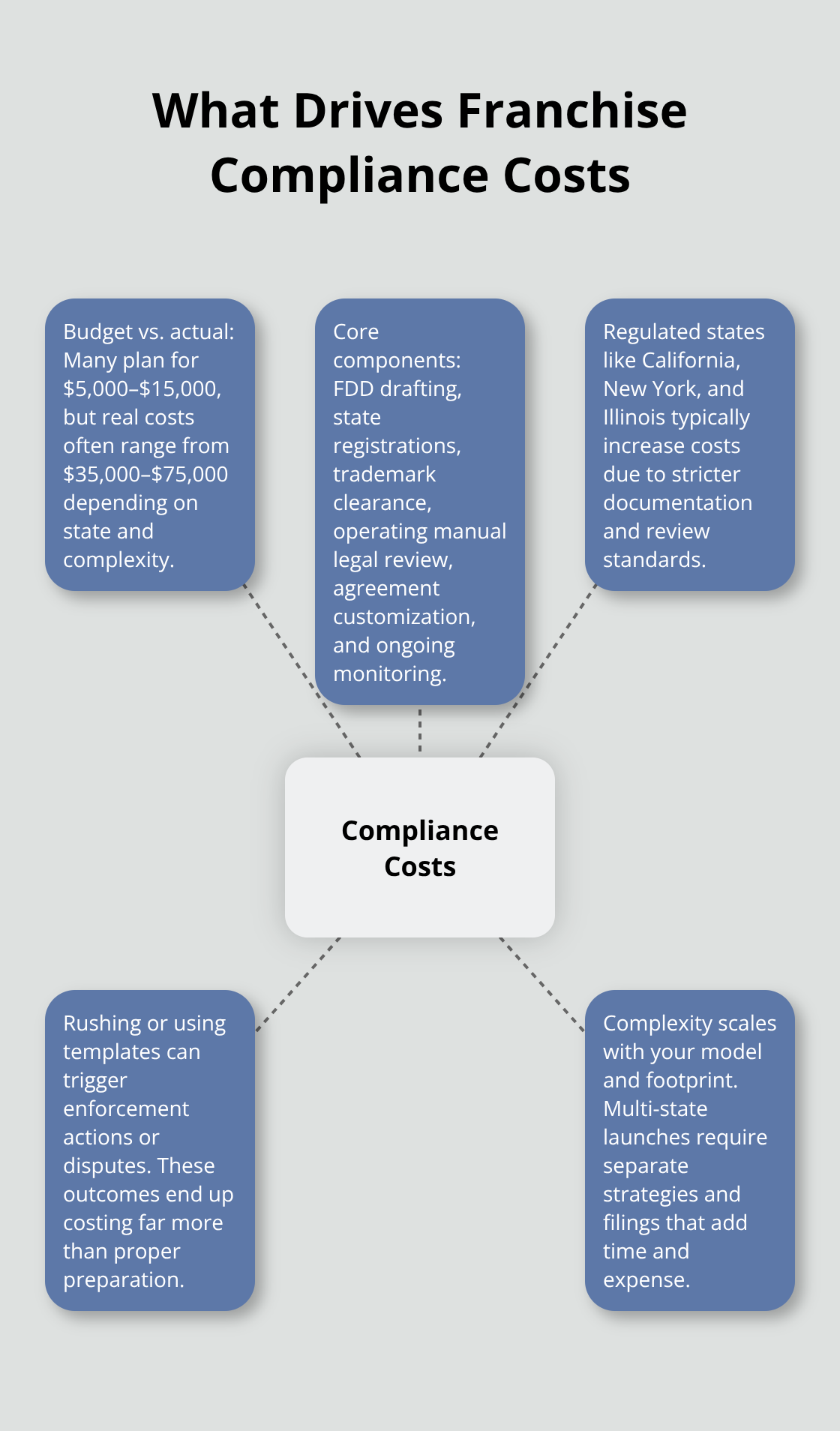
If you operate in regulated states like California, New York, or Illinois, expect higher costs because those states require additional documentation and impose stricter review standards. Many franchisors cut corners by using template agreements from online sources or hiring inexperienced attorneys to save money, then face enforcement actions, franchisee lawsuits, or regulatory penalties that cost five to ten times more.
Agreement Terms That Create Disputes
Your franchise agreement must address specific issues: territorial rights, renewal conditions, termination grounds, post-termination obligations, training scope, purchase requirements, and indemnification. Vague or one-sided terms create disputes that damage your franchise system’s reputation and profitability. An agreement drafted without understanding your specific business model, your target franchisee profile, and your state’s legal requirements will fail under pressure.
The investment in proper legal counsel now prevents costly litigation and regulatory problems later. Experienced franchise attorneys help you design agreements that protect your interests while remaining fair to franchisees, reducing the dispute risk that derails franchise systems.
Final Thoughts
Your franchise readiness assessment reveals whether your business can actually scale beyond your personal involvement. The work you complete now-documenting systems, protecting intellectual property, testing unit economics, and understanding compliance requirements-determines whether franchising becomes a growth engine or an expensive mistake. Start with a comprehensive legal and financial audit that reviews your operating manual for gaps, verifies your trademark registration status, calculates your unit economics across different markets, and identifies which state disclosure laws apply to your franchise launch.
Build your foundation with experienced guidance, since franchise law intersects with trademark law, corporate law, contract law, and state-specific regulations (attempting this alone or with general business counsel creates blind spots that surface during franchisee recruitment or regulatory review). We at Jennie Amante Law Office help franchisors navigate FDD drafting, franchise compliance, trademark protection, and agreement design so your system launches correctly and scales profitably. Jennie Amante provides practical, personalized legal counsel to franchisors nationwide for franchise and trademark matters, helping you reduce legal risk and position your venture for growth.
Create an implementation timeline that maps out when you’ll complete your audit, engage legal counsel, draft your FDD, register with required states, develop your training program, and recruit your first franchisees. Most franchise launches take six to twelve months from start to first franchisee opening, so building this timeline now prevents the rushed decisions that create problems later. Your franchise readiness assessment forms the foundation that determines whether your business scales successfully or struggles under the weight of unprepared franchisees and regulatory exposure.